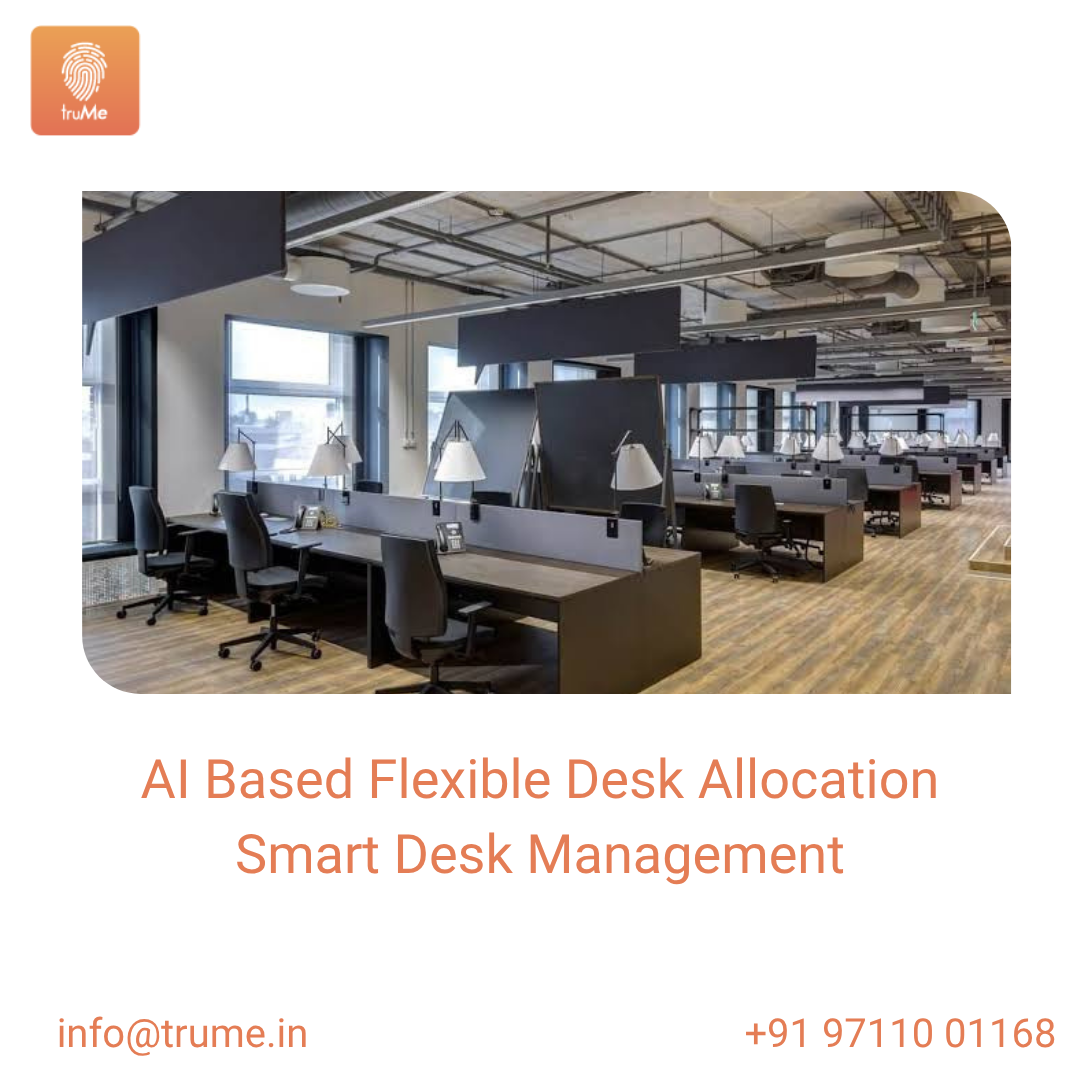
AI Based Flexible Desk Allocation: Smarter Workspaces for the Middle East
An AI based flexible desk allocation system helps Middle East organisations optimise office space, boost collaboration, and support hybrid work policies. By using machine learning to match employees to desks based on preferences, team proximity, and utilisation patterns, AI based flexible desk allocation reduces wasted real estate, simplifies hot-desking, and improves employee experience across offices in Dubai, Riyadh, Doha, and Abu Dhabi.

Why AI Based Flexible Desk Allocation Matters in the Middle East
- High real-estate costs. Office space in major Gulf cities is expensive; AI based flexible desk allocation drives higher utilisation and lowers cost-per-seat.
- Hybrid work adoption. As teams split time between home and office, intelligent desk allocation ensures teammates can sit near each other on office days.
- Culturally aware scheduling. Systems can incorporate regional needs—prayer breaks, gender-specific areas (where required), and local workweeks—to honour workplace norms.
- Multi-site operations. Companies with multiple floors or buildings benefit from centralised AI that balances occupancy across locations and reduces congestion.
- Improved employee experience. Faster, preference-aware desk assignment reduces friction for staff and supports well-being and productivity
How AI Based Flexible Desk Allocation Works
- Data inputs: The system ingests calendar events, historical desk usage, employee profiles, team memberships, and real-time sensor or check-in data.
- Preference modeling: Employees set preferences (near teammates, quiet zone, standing desk, window) which the AI weights alongside policy rules.
- Constraint handling: The AI respects constraints such as capacity limits, reserved desks, accessibility needs, and prayer-time schedules.
- Optimization engine: Machine learning algorithms match people to desks to maximize seat utilization, minimize team dispersion, and respect preferences.
- Dynamic reassignment: When plans change (last-minute presence, meeting room use), the system reoptimises assignments and notifies affected users.
- Feedback loop: Usage and satisfaction data continuously train the model to improve future allocations and hotspot predictions.
Key Benefits of AI Based Flexible Desk Allocation
- Higher utilisation rates: AI reduces empty desks and idle space by intelligently filling gaps and recovering no-shows.
- Better team collaboration: Teams are routed to neighbourhoods or adjacent desks on agreed in-office days to boost coordination.
- Reduced admin work: Facilities teams spend less time manually assigning desks and resolving seating conflicts.
- Data-driven real-estate decisions: Heatmaps and utilization analytics inform downsizing, lease negotiations, and space reconfiguration.
- Better employee experience: Preference-aware placement reduces friction and increases perceived workplace fairness.
- Faster onboarding: New hires receive recommended desk assignments near their teams from day one.
Features to Prioritize
- Calendar and HRIS integration: Sync with Outlook/Google calendars and HR systems to understand scheduled office days and team structures.
- Employee preference profiles: Let users choose and update preferences (team proximity, quiet zone, amenities).
- Zone and neighborhood booking: Reserve team zones or desks within defined neighborhoods to keep groups together.
- Check-in and no-show policies: Enforce grace periods and automatic desk release to free unused seats.
- Real-time reallocation: Push mobile notifications when last-minute rescheduling or optimisations occur.
- Analytics and heatmaps: Visualise utilization, peak days, and underused zones for strategic planning.
- Accessibility and compliance support: Respect accessibility requirements and local workplace regulations.
- Multi-language UX: Arabic-first interface with English fallback for broader adoption in the Middle East.
- Privacy and data controls: Anonymize location data, set retention policies, and allow opt-out for sensitive data use.
Common Use Cases
- Tech hub in Dubai: AI ensures engineers working on the same sprint sit near each other two days a week, improving standups and pair programming.
- Regional HQ in Riyadh: The system distributes hybrid staff across three floors to avoid elevator congestion and optimize breakout areas.
- Multinational with Doha office: Central analytics show underused zones, prompting reconfiguration into collaboration hubs and saving on leasing costs.
Implementation Best Practices for Middle East Organisations
- Define policy first: Decide on team-proximity rules, reserved desks, gender-area requirements (if any), and no-show policies before deploying AI.
- Start with a pilot: Run a pilot on one floor or team to gather preference data and validate model recommendations.
- Localise experience: Provide Arabic language support, account for local workweek patterns, and include prayer-time aware scheduling.
- Communicate transparently: Explain what data is used, how it’s stored, and how employees can control preferences to build trust.
- Combine AI with human oversight: Allow facilities or team managers to override assignments when necessary.
- Measure and iterate: Track utilisation, employee satisfaction, and collaboration metrics; feed results back to refine algorithms.
- Integrate with broader workplace stack: Connect to desk booking apps, access control, meeting-room booking, and visitor management for a seamless experience.
KPIs to Track
- Desk utilisation rate: Percentage of desks actively used over measured periods.
- No-show rate: Percentage of reserved desks that go unused.
- Employee satisfaction: Survey scores on seating fairness and ease of finding desks.
- Team proximity score: Measure of how often team members are seated near each other on office days.
- Real-estate cost per employee: Changes in cost after optimisation and possible space reductions.
- Admin hours saved: Reduction in manual seating management and reception queries.
Challenges and Mitigations
- Employee resistance: Mitigate by allowing preference setting, showing benefits, and permitting manager overrides.
- Data privacy concerns: Minimise personal data, anonymise analytics, and provide clear retention policies.
- Integration complexity: Prioritise essential integrations first (calendar, HRIS), then expand to sensors and access control.
- Cultural nuances: Work with local HR to ensure seating rules respect cultural practices and workplace norms.
Conclusion
AI based flexible desk allocation is a strategic tool for Middle East organisations seeking to support hybrid work, reduce real-estate costs, and improve team collaboration. By combining calendar insights, employee preferences, and real-time usage data, AI-driven allocation optimises space and delivers a better workplace experience—especially when localised for Arabic users and regional norms. For a regionally aware, enterprise-ready solution that supports AI-driven desk allocation, calendar and HRIS integrations, heatmaps, and privacy controls—consider truMe. to explore how truMe’s workspace optimisation features can enable smarter desk allocation, increase utilisation, and support your hybrid strategy.
More Related Blogs
AI-Powered Hot Desk Booking: Smart Workspace Management for UAE Enterprises
Hot Desking for Coworking Spaces UAE: How Smart Desk Booking Boosts Flexibility and Productivity
Hot Desk Booking in the Middle East: Trends, Benefits & How to Choose the Right Solution
Frequently Ask Question
Q: What is AI based flexible desk allocation?
A: It’s a system that uses AI and machine learning to assign employees to desks dynamically based on preferences, team proximity, calendar data, and real-time usage to improve utilisation and collaboration.
Q: How does AI respect prayer times and regional workweeks?
A: Systems can be configured with regional schedules and prayer-time windows so allocations and check-ins avoid conflicts with local practices.
Q: Can employees choose their preferred desks?
A: Yes—modern solutions let employees set preferences which the AI considers; managers can also reserve or override as needed.
Q: How quickly do organisations see ROI?
A: Many organisations see measurable utilisation improvements and reduced admin within 2–3 months after pilot and full rollout; real-estate savings often follow within 6–12 months.
Q: Is employee location data stored securely?
A: Best-practice vendors encrypt data in transit and at rest, anonymise analytics, and provide configurable retention policies to meet regional privacy expectations.